Data Modeling in the Modern Stack
Aug 02, 2023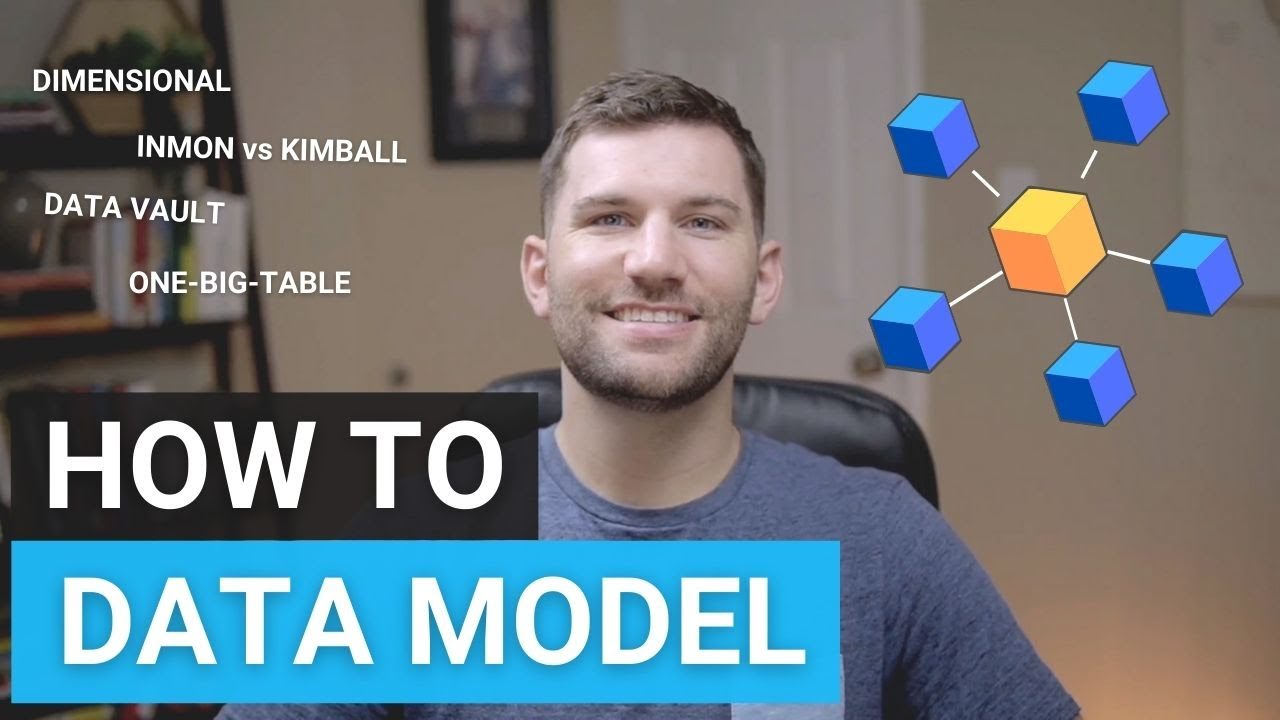
Data modeling is the most impactful decision a data team makes, because it sets the architecture and the path everyone follows from then on. The modern data stack hasn't changed that, even though cheap storage and powerful cloud warehouses have made the old arguments about performance and disk space less important. Four approaches cover most of what teams do: Inmon style normalized modeling with departmental data marts, Kimball style dimensional modeling with a star schema, Data Vault with hubs, links and satellites, and one big table where staging goes straight to wide marts. Each trades off redundancy, joins, compute cost and complexity differently. What I see work most often is a hybrid: a star schema underneath for structure and mental clarity, with wide one big table style marts on top for reporting and reverse ETL.
Key takeaways
- Modeling still matters in the modern stack for four reasons: too many sources to handle without a strategy, more kinds of data consumers than ever, compute cost, and the mental clarity of a shared set of rules.
- In cloud warehouses the expensive part is computation, not storage. A good model keeps you from throwing outlandish queries at the database.
- Inmon normalized modeling gives a true single source of truth but needs lots of joins and can produce conflicting data marts.
- Kimball dimensional modeling flattens into facts and dimensions organized by business function. Some redundancy, fewer joins at the analytics layer. Still the most common approach.
- Data Vault is highly organized and built for many sources, but it's complex and isn't designed for reporting, so it needs a presentation layer anyway.
- One big table is fast to stand up and leans on cheap storage, but compute costs can creep, logic gets buried in individual pipelines, and you're at the mercy of your source systems.
- The hybrid of a star schema plus wide marts is what I see most, and it also sets up a natural split between data engineers and analytics engineers.
Why data modeling still matters
Over the last five to ten years the modern data stack brought a wave of new tools, and with it a lot of disagreement about modeling. The camps look something like this:
- Traditional modeling is dead.
- Cloud databases are so strong you don't need a model at all.
- The modern stack causes more harm than good.
Whichever camp you're in, there are four reasons modeling is still worth taking seriously.
1. The number of sources
A business uses more data sources than ever, and as an engineer the only good way to get a hold of them is a modeling strategy.
The unfortunate reality is that sources get thrown over the fence to the engineer to figure out. Without a plan for where each one goes you get bombarded and overwhelmed.
2. The range of consumers
There are more types of data consumers than ever, each with different expectations of what they want to see and how they'll use it.
Without an organizational model behind the data it's harder to answer all of those questions, or at least to feel confident that you can.
3. Optimization: speed and cost
The guidelines differ between traditional row based databases and modern cloud column stores. In the modern stack we're mostly talking about cloud computing, where the expensive component is computation rather than storage.
These databases handle far more than the old ones and they're incredibly efficient, but there's still a limit. A good data model helps you balance that and avoid running too many outlandish queries.
4. Mental clarity
This is the most important one to me. A defined model gives everyone a clear strategy to follow:
- How tables get built
- How queries get written
- What goes where
It's also much easier to onboard people, especially if you're following a well known approach they can recognize on day one.
Common approaches
There are technically a million ways to model data, but four cover most of what teams actually do.
1. Normalized modeling (Inmon)
Made famous by Bill Inmon and around for a long time. Sources feed a staging layer, and the warehouse is designed to mimic the source systems themselves.
Everything is normalized, meaning no data redundancy, which also means a lot of joins to get a final result.
The other distinguishing feature is that the warehouse feeds individual data marts per department: finance, HR, operations, each with their own reporting needs.
The upside is that the warehouse is a true single source of truth, because it represents each source exactly. The downsides:
- Join heavy. Not ideal for column based cloud warehouses.
- Conflicting marts. Each department's mart can define things differently depending on how it's built.
- No single place for everything. You don't get full access to all of the data from one spot.
2. Dimensional modeling (Kimball)
Also called denormalized modeling, made famous by Ralph Kimball, and the home of the star schema. Rather than individual normalized tables that each mirror a source, you build flattened, denormalized facts and dimensions.
There's some redundancy in the warehouse, but at the analytics layer there are fewer joins and everything is available from one single source of truth.
The other difference is that it's designed around business function rather than around source data.
This is probably the most common strategy, and the one whose validity has been questioned most in the modern stack: is it still necessary to do all of this?
3. Data Vault
A more complex approach. You still have sources and staging, but the data is split into three kinds of table:
- Hubs. Key metadata.
- Links. More key metadata, connecting the hubs.
- Satellites. The descriptive values and context around them.
One of the main goals is that the raw vault loads source data without compromising any future logic. No transformations, just all the data allocated into its place. The business vault then applies more subtle transformations on top, following the same organizing principle.
This design isn't conducive to analytical reporting. It's for storage and organization, which is why you'll usually see a presentation layer on top that mimics a dimensional model for analytics.
The upside is that it's very organized with a clear strategy for what goes where. The downside is that it's complicated, and it's really intended for environments with a lot of different sources.
4. One big table (OBT)
One of the newer approaches. You go straight to very wide, denormalized models, from staging directly to the final reporting mart.
Two theories sit behind it: storage is cheap, so wide tables are fine, and modern cloud databases compute so well that you don't need to store intermediate structures.
You might see an intermediate layer in the middle, but those are often ephemeral: not materialized, there to support one mart rather than being reused.
The upside is obvious: it's easier, and you're up and running quickly. The downsides are real:
- Compute creep. Each pipeline becomes an extensive query with a lot of business logic inside it, and the more complicated those get, the more expensive the compute. Fine at the start, unwieldy at enterprise scale.
- Redundancy. Each mart repeats the same underlying data.
- At the mercy of the sources. With no modeling in the middle, you have to be deliberate about each pipeline or you end up taking everything and building a pipeline for each, which gets out of hand fast.
Things to consider
Slow down, then embrace what's new
The new tools make the debate about performance and storage less decisive than it used to be. The values of organization and mental clarity are as important as ever, and a model is the foundation for handling every new source that comes at you.
It's tempting to go fast and build models quickly. In the long run that introduces problems you could have avoided by slowing down and building the warehouse strategically.
At the same time, embrace what's new: column stores, cheap storage, the idea of one big table.
The hybrid approach
Take the wide marts and put a star schema underneath them. That's the hybrid I see most often.
To the end user it looks the same, a wide mart they can query. To the engineers there's a structure for modeling the data, and the end to end queries are broken into manageable pieces instead of one enormous pipeline.
The cost is that you're arguably doubling up storage with the extra mart layer, but storage is the cheap part.
Marts serve more than reports
The mart layer matters for another reason. The modern stack brought reverse ETL, which syncs warehouse data back into business applications. So the model is now serving:
- People running queries
- Reporting tools
- Reverse ETL syncs into business applications
Design the marts to handle all of those scenarios.
Team dynamics
Finally, think about responsibilities. Job titles have blurred, but a hybrid like this creates a natural split: data engineers focus on the core data model, and analytics engineers or analysts focus on the data marts and the analytics, with overlap between them.
It doesn't have to be exactly that, but it's the kind of thing to decide up front rather than figuring it out on the fly after you've already built everything.
Key terms
Modern data stack
The generation of cloud based tools, usually a column store warehouse, managed ingestion, dbt style transformation and BI, that replaced on premise row based warehouses over the last decade.
Normalized modeling
The Inmon approach: a warehouse that mirrors source systems with no redundancy, feeding separate departmental data marts.
Dimensional modeling
The Kimball approach: flattened fact and dimension tables organized by business function in a star schema.
Data Vault
A modeling method that splits data into hubs, links and satellites for organized, transformation free storage, with a presentation layer on top for reporting.
One big table
An approach that goes straight from staging to wide, denormalized reporting tables with little or no modeled layer in between.
Common questions
Is dimensional modeling still relevant in the modern data stack?
Yes. The performance argument for it has weakened because cloud warehouses handle wide tables well, but the organizational argument hasn't. A star schema gives the team shared rules, makes onboarding easier, and breaks end to end logic into pieces. Most teams I see keep it underneath wide reporting marts.
What is the difference between Inmon and Kimball?
Inmon normalizes the warehouse to mirror source systems exactly and builds separate departmental marts from it. Kimball denormalizes into facts and dimensions organized by business process so analysts can query one star schema with fewer joins. Inmon is stricter about a single source of truth; Kimball is easier to report from.
When does Data Vault make sense?
When you have a large number of sources and need a disciplined, auditable way to land all of them without baking in business logic. It's complex, and it still needs a dimensional presentation layer for reporting, so for a small team with a handful of sources it's usually more structure than the problem calls for.
What are the downsides of one big table?
Compute cost can creep as each pipeline becomes a large query full of business logic, the same data gets repeated across marts, and with no modeled layer in the middle you're dependent on the shape of your source systems. It's quick to start and harder to keep tidy as it scales.
What is a hybrid data modeling approach?
A star schema of facts and dimensions as the core model, with wide one big table style marts built on top for reports and reverse ETL. Users get simple wide tables; engineers get structure. The trade is some extra storage, which is the cheap part of a cloud warehouse.
Related reading
- Comparing 3 Types of Data Modeling
- The Struggle of Data Modeling (Facts vs Dimensions)
- How to Create a 3 Layer Data Model Pipeline
- Data Architecture with dbt (Putting It All Together)
Final takeaway
The hybrid described here is the shape most of the warehouses I've helped build or review have ended up in. Usually that's after a team started with one big table for speed and then needed structure once the number of sources and consumers grew.
The approaches above are the options I walk through with a team before that decision gets made for them.
Additional Free Resources
Starter Guides & Checklists
Explore additional free resources built on the same patterns I use with real clients so you can build your own with structure and confidence. Topics include data architecture, modeling and more specifically for small data teams.